Energy prices are an industrial policy whether governments admit it or not
A factory in Portugal pays a different electricity price than one in France, which pays differently than one in Germany. These differences decide where things get built.
By VastBlue Editorial · 2026-03-26 · 20 min read
Series: Reindustrialising Europe · Episode 5
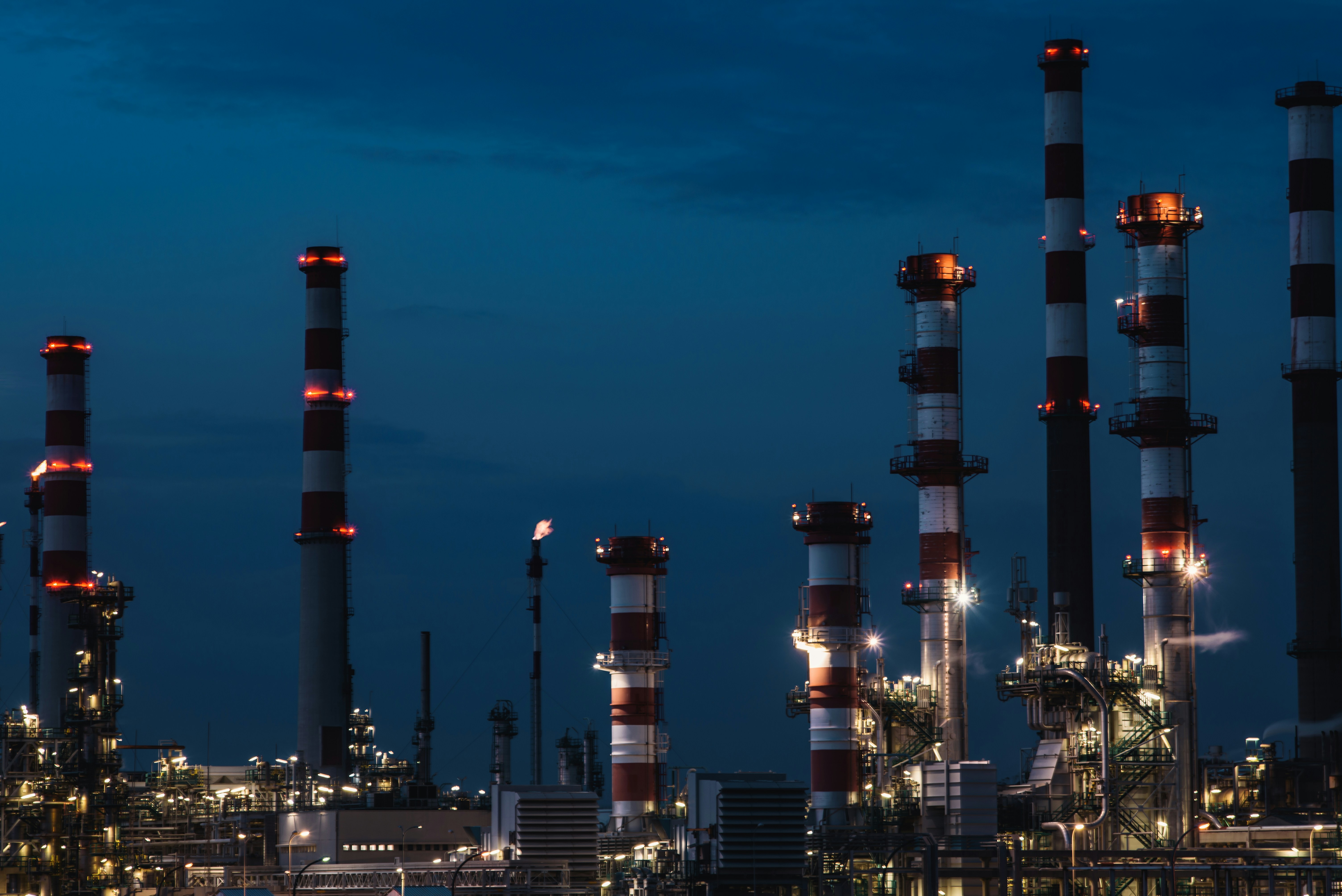
The Price That Decides Everything
In the summer of 2022, a ceramics manufacturer in Aveiro, Portugal, received an electricity bill that was higher than its monthly payroll. The factory had operated for three generations, producing sanitary ware and decorative tiles for markets across Europe and North Africa. Its kilns ran on natural gas, but its forming lines, glazing stations, drying chambers, and the entire administrative and logistics operation ran on electricity. The company employed 280 people. When the electricity contract came up for renewal in September 2022, the quoted price was more than three times the rate the factory had been paying the previous year. The owner — a third-generation industrialist who had survived recessions, the 2008 financial crisis, and a global pandemic — told a Portuguese business newspaper that for the first time, he was considering moving production to Morocco.
He was not being dramatic. He was doing arithmetic. The electricity price differential between Portugal and Morocco for industrial consumers was, at that moment, roughly four to one. A factory consuming 10 gigawatt-hours per year — a mid-sized ceramics operation — would pay approximately €1.5 million annually in Morocco and €6 million in Portugal. That €4.5 million difference was not a rounding error. It was the difference between a viable business and an unviable one. It was larger than the factory's entire annual profit margin in a good year. And the Moroccan price was not subsidised below cost. It reflected cheaper gas, lower network charges, less regulatory overhead, and the absence of the renewable energy surcharges that European electricity consumers had been absorbing for a decade.
This is not a story about one factory in Aveiro. It is a story about the most consequential industrial policy instrument in Europe — one that most governments did not consciously design, do not fully control, and rarely acknowledge as a policy instrument at all. The price of electricity does more to determine which industries survive, where factories locate, and which countries develop manufacturing bases than any tariff schedule, any tax incentive, any strategic industry communication from Brussels. Energy prices are not a background input. They are the foreground. They are the single variable that, more than labour costs, more than regulation, more than logistics, determines whether energy-intensive manufacturing is economically possible in a given location. And across the European Union, that variable differs by factors of two, three, or four between member states that share a single market, a single currency, and — in theory — a single energy policy.
A Map of Invisible Borders
The Eurostat industrial electricity price data for the second half of 2024 reveals a landscape of divergence that would be difficult to design deliberately. Germany's industrial electricity price for medium-large consumers — those using between 20 and 70 GWh per year — averaged approximately €185 per megawatt-hour, including all taxes, levies, and network charges. France's comparable rate was roughly €110 per MWh. Spain came in at around €135 per MWh. Portugal at approximately €140 per MWh. Sweden — the country that has become the destination of choice for energy-intensive investment in Europe — was approximately €55 per MWh. Finland was comparable. Norway, outside the EU but within the European Economic Area, was even lower.
These are not small differences. A large aluminium smelter consuming 3,000 GWh per year — roughly the size of the Dunkirk smelter in northern France, one of the last primary aluminium plants in Western Europe — would face an annual electricity bill of approximately €165 million in Sweden and approximately €555 million in Germany. The difference — €390 million per year — is larger than the operating profit of most aluminium smelters on the planet. It is larger than the capital cost of building a new smelter, amortised over its thirty-year economic life. No rational investor, regardless of proximity to end markets, quality of infrastructure, or availability of skilled labour, would build or maintain an aluminium smelter in Germany when the same smelter in Sweden costs €390 million less per year to run. And, indeed, they do not. Germany's last primary aluminium smelter — Trimet's facility in Hamburg — has been operating at reduced capacity since 2022 and has publicly described its situation as existential.
The pattern is not random. It follows the geology and policy choices of individual member states with remarkable fidelity. Countries with abundant hydropower — Sweden, Finland, Austria, Norway — have structurally low electricity prices. Countries that made early, large-scale commitments to nuclear power — France, above all — have electricity prices that reflect the low marginal cost of amortised nuclear generation. Countries that invested heavily in renewables but financed those investments through consumer levies — Germany, Spain, Italy — have prices that include substantial surcharges for renewable energy support schemes, capacity payments, and grid expansion costs. Countries that are geographically peripheral to the European interconnected grid and depend heavily on imported gas for marginal generation — Portugal, Greece, the Baltic states — pay prices that reflect their exposure to global gas markets and limited interconnection.
Each of these outcomes is the product of decisions made decades ago. Sweden's hydropower was built in the mid-twentieth century. France's nuclear fleet was constructed between 1970 and 2000. Germany's Energiewende — the comprehensive energy transition launched after the Fukushima disaster in 2011 — financed one of the world's most ambitious renewable energy build-outs through a consumer surcharge, the EEG-Umlage, that at its peak added over €60 per MWh to German electricity bills. These were political choices, made by elected governments, with industrial consequences that are playing out across decades. They were not labelled as industrial policy at the time. The Energiewende was framed as environmental policy. France's nuclear programme was framed as energy independence policy. Sweden's hydropower expansion was infrastructure policy. But the industrial consequences — the factories that stayed, the factories that left, the factories that were never built — are indistinguishable from the consequences of deliberate industrial policy. The effect is the policy, regardless of the intent.
France: The Nuclear Advantage and Its Contradictions
France is the clearest example of how energy infrastructure becomes industrial policy by accumulation. The French nuclear fleet — 56 reactors operated by EDF, generating approximately 65 per cent of the country's electricity — gives France a structural cost advantage in electricity production that no other large European economy can replicate. Nuclear power's marginal cost of generation is approximately €15-25 per MWh once the capital cost of construction is amortised. For comparison, gas-fired generation in 2024 cost approximately €80-120 per MWh depending on gas prices and carbon permit costs. This cost advantage is not the product of current policy. It is the accumulated dividend of investments made between 1974 and 1999, when France built its reactor fleet at a pace and scale that no Western democracy has matched before or since.
The mechanism through which this advantage reaches French industry is the ARENH — Accès Régulé à l'Électricité Nucléaire Historique. Created by the Nome law of 2010, ARENH requires EDF to sell a fixed volume of nuclear electricity — up to 100 terawatt-hours per year — to competing suppliers at a regulated price. That price was initially set at €42 per MWh and remained unchanged for over a decade. During the energy crisis of 2022, when wholesale electricity prices on the European spot market exceeded €300 per MWh and briefly touched €1,000 per MWh in some forward contracts, French industrial consumers with access to ARENH-priced electricity were paying less than one-sixth of the spot rate. The industrial competitiveness implications were enormous. An electrochemical plant in Dunkirk or a glass factory in Lyon was paying a fraction of what its German competitor paid for the same electron.
But the ARENH system contains a profound contradiction. The regulated price was set well below the full cost of maintaining and renewing France's nuclear fleet. EDF's financial results tell the story: the company accumulated over €60 billion in debt by 2023, driven by the combination of regulated prices that did not cover costs, an ageing reactor fleet requiring massive maintenance expenditure — the so-called "grand carénage" programme, estimated at over €50 billion — and the costs of constructing new-generation EPR reactors at Flamanville and Hinkley Point, both of which have suffered extraordinary cost overruns and delays. Flamanville 3, originally budgeted at €3.3 billion with a 2012 completion date, finally began commercial operations in late 2024 at a cost exceeding €13 billion. The full nationalisation of EDF by the French state in 2023, taking the company private at a cost of approximately €10 billion, was an acknowledgement that the existing model had broken the company that was supposed to sustain it.
France gave its industries cheap electricity for a generation by underpricing nuclear power. The bill arrived in the form of a €60 billion debt at EDF, a fleet of ageing reactors requiring €50 billion in refurbishment, and new reactors that cost four times their original estimate. The industrial advantage was real. The question is who ultimately pays for it.
Editorial analysis
The post-ARENH framework, still being negotiated in 2026, attempts to thread an impossible needle: maintaining price stability for industry while generating sufficient revenue to finance fleet renewal and new nuclear construction. The proposed mechanism — a price corridor with a reference price of approximately €70 per MWh, with revenues above a ceiling redistributed to consumers and revenue below a floor guaranteed by the state — is an elaborate attempt to preserve the industrial advantage of nuclear while sharing the costs of maintaining it. Whether it will succeed depends on factors that are unknowable in advance: the pace of fleet renewal, the cost performance of new EPR2 reactors, the evolution of wholesale electricity markets, and the willingness of French taxpayers to continue absorbing nuclear risk through the state's balance sheet.
Germany: The Price of the Energiewende
If France illustrates the industrial dividend of cheap energy, Germany illustrates the industrial cost of expensive energy. Germany's electricity prices for industrial consumers are the highest among major European economies and among the highest in the OECD. This is not because Germany lacks generating capacity — it has more installed renewable capacity than any country in Europe — but because of how that capacity was financed, how the electricity market is structured, and the political decision to simultaneously exit nuclear power and coal.
The Energiewende created one of the world's most successful renewable energy deployment programmes. Germany's installed solar capacity exceeds 80 gigawatts. Its onshore and offshore wind capacity exceeds 70 gigawatts. On sunny, windy days, renewable generation can exceed total demand, pushing wholesale prices to zero or below. But these installations were financed through the EEG-Umlage, a surcharge on electricity bills that at its peak in 2022 reached €37.23 per MWh — a levy added to every kilowatt-hour consumed by households and most industrial users. The surcharge was abolished in July 2022 and moved to the federal budget, but the underlying costs did not disappear. They were merely shifted from electricity bills to general taxation, a political relabelling that changed the optics but not the arithmetic.
More fundamentally, Germany's electricity market structure ensures that the price paid by consumers reflects the cost of the most expensive generating unit needed to meet demand — the so-called merit order effect. On days when wind and solar output is low, that marginal unit is typically a gas-fired power plant operating at costs of €80-130 per MWh. The result is a market where abundant renewable generation coexists with high consumer prices, because the market-clearing price is set by the most expensive unit dispatched, not by the average cost of all generation. Germany has cheap electrons and expensive electricity simultaneously. The paradox is structural, not accidental. It is a direct consequence of market design choices that were made for sound theoretical reasons — marginal cost pricing promotes efficient dispatch — but produce outcomes that are devastating for energy-intensive industry.
Germany has attempted to shield its largest industrial consumers through the "Besondere Ausgleichsregelung" — the special equalisation scheme — which exempts energy-intensive firms from most renewable surcharges and network charges. Approximately 2,300 German companies benefit from these exemptions, paying electricity prices significantly below the standard industrial rate. But the exemptions are controversial, subject to periodic European Commission scrutiny under state aid rules, and do not fully compensate for the underlying cost disadvantage. A German chemical company paying €120 per MWh under the exemption scheme is still paying more than double the rate available to a competitor in Sweden or Norway. The exemptions narrow the gap. They do not close it.
The decision to exit nuclear power, completed in April 2023 with the shutdown of the last three German reactors — Isar 2, Neckarwestheim 2, and Emsland — removed approximately 30 terawatt-hours of annual zero-carbon, low-marginal-cost generation from the system. The timing, in the midst of an energy crisis triggered by the loss of Russian gas supplies, was criticised by industry leaders, energy economists, and even some members of the governing coalition. But the decision was politically irreversible: the anti-nuclear consensus in Germany had been building since the 1970s, was cemented by Fukushima, and was backed by legislation that had been passed, amended, reversed, and re-enacted over multiple electoral cycles. Germany's nuclear exit is the single most consequential energy policy decision made by any European country in the twenty-first century. Its industrial consequences will unfold over decades.
The Iberian Exception and the Nordic Magnet
Spain and Portugal navigated the 2022 energy crisis differently from the rest of Europe — and the industrial consequences of their approach offer a case study in how energy market design becomes industrial policy. In June 2022, the Iberian Peninsula obtained a temporary derogation from EU electricity market rules, allowing Spain and Portugal to cap the price of gas used for electricity generation at an initial €40 per MWh, rising incrementally to €70 per MWh over twelve months. The mechanism — the "Iberian exception" or "tope del gas" — was designed to decouple electricity prices from the gas price spikes that were driving wholesale rates above €300 per MWh across the rest of Europe.
The cap worked, in the narrow sense that Iberian wholesale electricity prices fell dramatically relative to the rest of Europe. Spanish and Portuguese industrial consumers paid roughly 40-50 per cent less than their German or Italian counterparts during the peak crisis period. But the mechanism was not free. The cost of the subsidy — the difference between the capped price and the actual market price of gas — was approximately €8.4 billion over its twelve-month duration, shared between Spanish and Portuguese taxpayers. And the cap created perverse incentives: it made gas-fired generation artificially cheap relative to renewables, increasing gas consumption and gas imports at precisely the moment when Europe was trying to reduce its dependence on imported fossil fuels. France protested that cheap Iberian electricity was flowing north through interconnectors, undercutting French generators while Spanish consumers received the subsidy benefit. The Iberian exception demonstrated a basic truth about energy markets: any intervention that reduces prices for some consumers raises costs for others, and in an interconnected market, the others may be in a different country.
The Iberian gas cap saved factories in Aveiro and Barcelona. It also cost taxpayers €8.4 billion, increased gas imports, and generated diplomatic friction with France. Every energy market intervention has this character: visible beneficiaries, distributed costs, and cross-border consequences that no single government can control.
Editorial analysis
At the other end of Europe, the Nordic countries have become the primary destination for energy-intensive industrial investment precisely because their energy mix — dominated by hydropower and, increasingly, wind — produces electricity at costs that most of Europe cannot match. Sweden's electricity prices in its northern bidding zones (SE1 and SE2) averaged below €30 per MWh in 2024, reflecting the abundance of hydropower in northern Sweden and the limited transmission capacity connecting the north to the more expensive southern zones. This price structure has triggered an industrial gold rush.
H2 Green Steel is building a €6.5 billion hydrogen-based steel plant near Boden in northern Sweden, explicitly because of the electricity price. Northvolt chose Skellefteå for its battery gigafactory — a €4 billion investment — for the same reason. Microsoft, Google, and Amazon have sited major data centre investments in Sweden and Finland, drawn by both the cold climate and the cheap, clean electricity. LKAB, the Swedish state-owned mining company, is investing €40 billion over two decades to transform its iron ore operations from traditional pelletisation to direct reduction using green hydrogen, an investment that is viable only because Swedish electricity prices make green hydrogen production competitive with fossil alternatives.
But the Nordic model has limits. Northern Sweden's cheap electricity depends on hydropower capacity that is essentially fully developed — the major rivers have been dammed, the reservoirs built, and there is limited scope for further expansion without unacceptable environmental impact on remaining free-flowing rivers. The transmission grid connecting northern Sweden to the rest of the country and to the European interconnected system is already constrained, and the planned investments in grid expansion will take a decade to complete. Each new large industrial consumer in northern Sweden competes with existing users for the same finite supply of cheap electrons. The price advantage, if enough factories are built, will eventually arbitrage itself away.
The Hidden Architecture of Competitive Advantage
What the European landscape reveals, when examined through the lens of industrial electricity prices, is a continent where the most consequential industrial policy decisions were made not by industry ministers or trade commissioners but by energy planners, utility regulators, and the geological accidents of hydrology. France's industrial base exists in its current form because de Gaulle and Pompidou built nuclear reactors. Sweden's industrial future is being shaped by rivers that were dammed fifty years ago. Germany's industrial base is eroding because the country chose to finance renewable energy through consumer levies and exit nuclear power simultaneously — decisions made for environmental and political reasons with industrial consequences that were foreseeable but not foregrounded in the political debate.
The European Commission has acknowledged this reality, if obliquely. The 2024 Draghi Report on European competitiveness identified energy prices as the single largest drag on European industrial competitiveness, estimating that European industrial electricity prices were 2-3 times higher than those in the United States and 4-5 times higher than in China. The report recommended a range of measures — accelerating renewable deployment, reforming electricity market design, completing the internal energy market, and developing long-term industrial electricity contracts — but was notably silent on the most fundamental driver of price divergence within Europe: the dramatically different national energy mixes that are the product of decades of national policy choices that cannot be reversed on any politically relevant timeline.
The electricity market reform adopted by the EU in 2024 — amending Regulation (EU) 2019/943 and Directive (EU) 2019/944 — introduced Contracts for Difference (CfDs) as the standard support mechanism for new renewable and nuclear generation, and created a framework for long-term Power Purchase Agreements (PPAs) intended to give industrial consumers price certainty. These reforms are directionally sensible, but they address the price of new generation, not the price of existing generation, which is where the cost divergence between member states originates. A new wind farm in Germany and a new wind farm in Spain will produce electricity at similar costs. But the electricity system into which each feeds — the network charges, the legacy costs, the capacity mechanisms, the regulatory overhead — will produce very different end-user prices. The reforms do not touch these structural differences because they cannot. Network costs reflect physical infrastructure. Legacy costs reflect past policy choices. Capacity mechanisms reflect national security-of-supply assessments. These are national, not European, questions, and they will remain so.
The result is a single market that is not single in the dimension that matters most to industry. A company choosing where to build a new factory in Europe in 2026 faces an electricity price landscape that varies by a factor of three or more depending on the member state. That variation is stable, structurally embedded, and unlikely to converge within any investment planning horizon. It is, in effect, a system of differential subsidies and penalties applied to manufacturing based purely on geography — not through any deliberate industrial policy but through the accumulated consequences of energy decisions made over half a century.
- Aluminium smelting: effectively departed from Germany, concentrated in Norway, Iceland, and France
- Silicon metal: relocated from Germany and France to Norway and Spain for lower electricity costs
- Electric arc furnace steelmaking: expanding in Iberia and the Nordics, contracting in Germany
- Battery cell manufacturing: concentrated in Sweden, Hungary, and Poland — all with below-average electricity costs
- Data centres: clustering in Ireland, Sweden, Finland, and the Netherlands for cheap, clean power
- Chemical production: BASF's €10 billion investment in Zhanjiang, China, dwarfs any new European chemical investment, with energy costs cited as a primary factor
- Glass manufacturing: migrating from Germany and Belgium toward Turkey and North Africa
- Green hydrogen production: viable only in locations with electricity below €40/MWh, restricting projects to the Nordics, Iberia, and North Africa
The Honest Conversation Europe Has Not Had
European industrial policy discourse is full of strategies, green deals, sovereignty initiatives, and competitiveness councils. It is remarkably empty of honest discussion about electricity prices. The reason is not mysterious. Electricity prices in Europe are the product of a series of policy choices — nuclear, renewables, liberalisation, environmental regulation, grid investment — that are each defended by powerful constituencies. Nuclear is defended by France and the countries that have built or plan to build reactors. Renewable support schemes are defended by the environmental movement, the renewable energy industry, and the countries whose industrial strategies depend on clean energy branding. Gas infrastructure is defended by the countries that built it and the transit states that profit from it. Network charges are defended by the regulated utilities that collect them. To acknowledge that the combined effect of all these defensible individual choices is an electricity price landscape that is driving energy-intensive manufacturing out of large parts of Europe requires a level of political honesty that is rare in any democracy and essentially nonexistent in a polity of twenty-seven members.
But the factories do not wait for the political conversation to mature. The ceramics manufacturer in Aveiro made his decision. BASF made its decision. Trimet is making its decision. Every month, in industrial planning offices across the continent, investment committees are comparing electricity price projections for Germany versus Sweden, for Italy versus Spain, for Europe versus the rest of the world. These decisions are not ideological. They are arithmetical. And the arithmetic, for large parts of European manufacturing, is increasingly pointing away from the countries that have historically been Europe's industrial heartland.
The politically uncomfortable truth is that Europe cannot simultaneously maintain the world's most ambitious environmental regulation, the world's highest industrial electricity prices, and a globally competitive manufacturing sector. Two of these three objectives can coexist. All three cannot. This is not an argument against environmental regulation or renewable energy. It is an argument for acknowledging that energy costs are an industrial policy outcome and must be managed as such — deliberately, transparently, and with the same strategic seriousness that governments bring to trade policy, competition policy, or defence policy.
Every electricity bill is a vote on where industry locates. Europe has been casting those votes for decades — through nuclear programmes, renewable surcharges, network investments, and market designs — without acknowledging that it was conducting an industrial policy by other means. The factories have noticed, even if the politicians have not.
Editorial analysis
The path forward is not to pretend that price convergence is achievable within the current framework. It is not, and promising it would be dishonest. The path forward is to accept that the European electricity market will remain a patchwork of national cost structures for at least another generation, and to design industrial policy around that reality rather than the aspiration of a unified energy market that has been thirty years in the promising and remains thirty years away. This means accepting that different member states will have different industrial comparative advantages based on their energy endowments. It means designing EU-level industrial instruments — financing mechanisms, procurement preferences, carbon border adjustments — that work with the existing price landscape rather than assuming it away. And it means having an honest conversation about the trade-offs that each country has made, is making, and will continue to make between energy costs, environmental ambition, energy security, and industrial competitiveness.
A factory in Portugal pays a different electricity price than one in France, which pays differently than one in Germany. These differences are not market imperfections to be corrected. They are the accumulated expression of national choices about energy, environment, and economy. They decide where things get built. They are an industrial policy. The only question is whether Europe will begin to treat them as one.
Sources
- Eurostat — Electricity prices for non-household consumers, second half 2024 — https://ec.europa.eu/eurostat/databrowser/view/nrg_pc_205/default/table
- Draghi Report — The future of European competitiveness, September 2024 — https://commission.europa.eu/topics/strengthening-european-competitiveness/eu-competitiveness-looking-ahead_en
- EU Electricity Market Reform — Regulation (EU) 2024/1747 amending Regulation (EU) 2019/943 — https://eur-lex.europa.eu/eli/reg/2024/1747/oj
- Cour des Comptes — Le rapport sur EDF et la régulation du nucléaire historique, 2023 — https://www.ccomptes.fr/
- BASF Annual Report 2024 — Ludwigshafen transformation programme — https://www.basf.com/global/en/investors/calendar-and-publications/annual-report.html
- H2 Green Steel — Boden Plant Investment Decision — https://www.h2greensteel.com/
- Bruegel — Industrial electricity prices in Europe: a comparison across member states, 2024 — https://www.bruegel.org/
- European Commission — State aid: Germany special equalisation scheme for energy-intensive industries — https://ec.europa.eu/competition/state_aid/cases/