Fincantieri builds the most complex ships on earth. Why can it not deliver them on time?
The Italian shipbuilder has the engineering. It has the orders. It struggles with the same procurement and workforce constraints that plague European industrial scale-up across sectors.
By VastBlue Editorial · 2026-03-26 · 22 min read
Series: Reindustrialising Europe · Episode 7
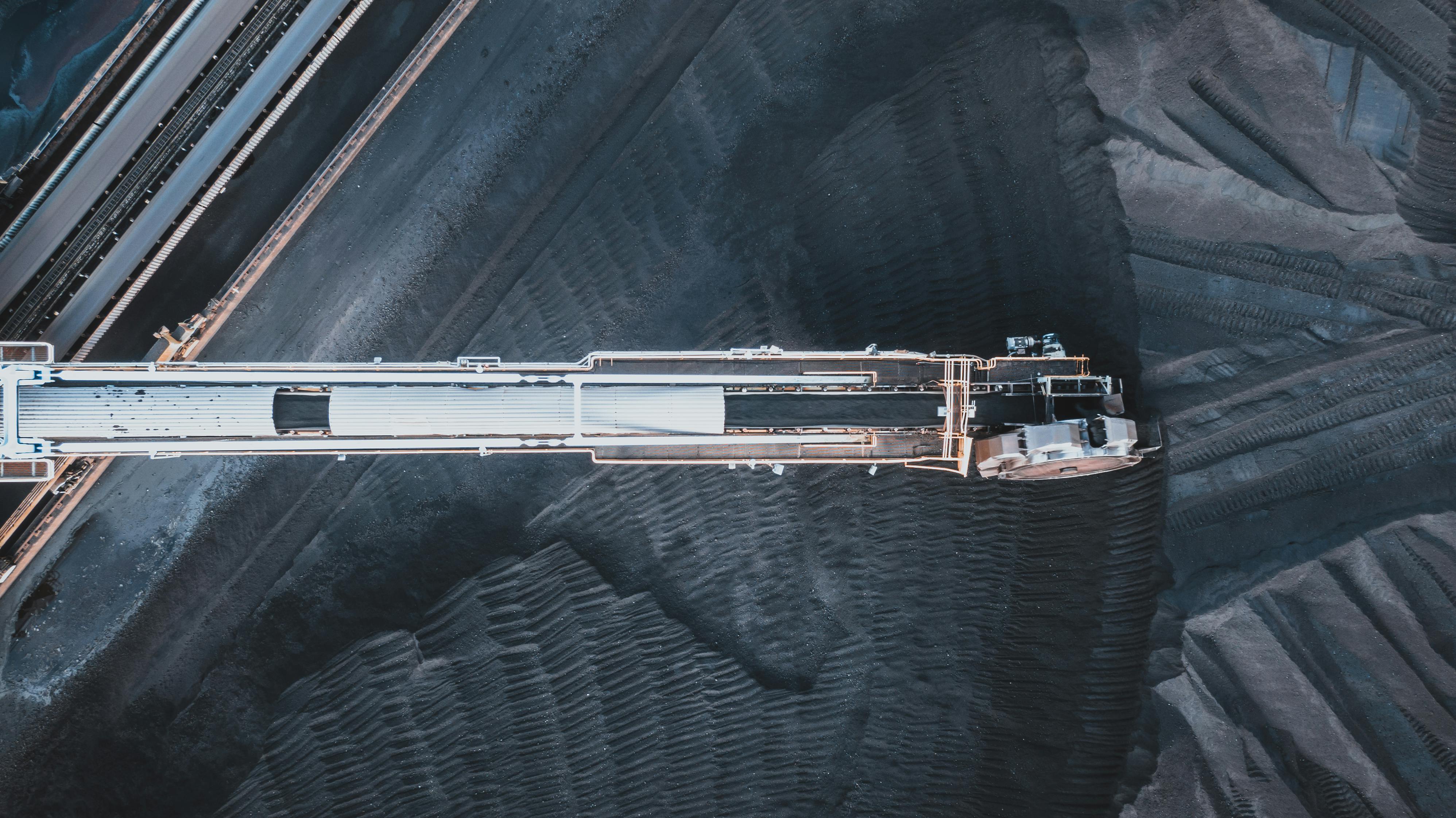
The Shipyard at the Edge of the Adriatic
Monfalcone sits where the Karst plateau drops toward the Adriatic coast, a few kilometres from the Slovenian border, in the northeast corner of Italy where the architecture begins to look more Viennese than Venetian. The town is unremarkable in most respects — a provincial centre of forty thousand people, overshadowed by nearby Trieste, connected to the rest of Italy by a single motorway and an ageing rail line. What makes Monfalcone extraordinary is what sits along its waterfront: one of the largest and most technically sophisticated shipyards in the world.
The Fincantieri shipyard at Monfalcone stretches for nearly two kilometres along the coast. Two massive dry docks — one 360 metres long, the other 290 — dominate the landscape. Cranes capable of lifting a thousand tonnes in a single operation stand along the quays like the skeletons of enormous birds. At any given moment, there are two or three cruise ships under construction simultaneously, each one a floating structure more complex than most buildings erected on land. A modern cruise ship contains between 2,500 and 6,000 passenger cabins, dozens of restaurants, theatres, casinos, swimming pools, medical facilities, water treatment plants, power generation systems, navigation suites, and hundreds of thousands of metres of cabling and piping. The largest vessels — those in the 180,000 gross tonnage class — are among the most complex movable structures ever built by human beings.
Fincantieri is the largest shipbuilder in Europe, the largest builder of cruise ships in the world by tonnage, and one of the top three naval shipbuilders globally. The company operates eighteen shipyards across Italy, Romania, Norway, and the United States, employs approximately twenty-one thousand people directly, and orchestrates a supply chain of over five thousand companies. In 2024, its order backlog exceeded 40 billion euros — the largest in the company's history. It builds for Carnival Corporation, Royal Caribbean, MSC Cruises, Viking, and virtually every major cruise line in the world. It builds frigates, corvettes, and patrol vessels for the Italian Navy and for export customers including Qatar, Saudi Arabia, Indonesia, and Egypt. It builds offshore vessels, research ships, and specialised units for the oil and gas sector. In terms of technical capability and product complexity, Fincantieri is without question one of the most accomplished industrial enterprises in Europe.
It is also chronically late.
The Delivery Problem
In 2023, Fincantieri delivered eleven ships. Several were delivered behind schedule, some by weeks, others by months. In 2024, the pattern continued. Delivery delays of three to six months became routine rather than exceptional. The company's own financial reports acknowledged the issue with the careful language of corporate communications: "schedule pressure" and "execution challenges in a complex operating environment." Behind the euphemisms lay a more uncomfortable truth. Fincantieri, despite possessing world-class engineering capability, despite having one of the most experienced naval architectural teams on the planet, despite operating in a market where demand for its products exceeded its capacity to build them, could not reliably deliver ships on the dates it had contracted to deliver them.
The financial consequences are not trivial. A cruise ship delivered late costs its operator between one and three million dollars per day in lost revenue — every day the ship sits in the yard instead of carrying passengers is a day of zero income against a fully committed crew, insurance, and financing cost. Liquidated damages clauses in shipbuilding contracts typically cap the builder's liability, but they damage relationships and reputation. For naval vessels, late delivery has strategic implications: a frigate delivered six months late is six months of reduced fleet availability for a navy that may have planned its patrol rotations and training cycles around the original schedule. Italy's FREMM frigate programme, one of the largest European naval procurement projects of the past two decades, experienced cumulative delays measured in years across the class of ten vessels.
The question is not whether Fincantieri can build these ships. It demonstrably can. The LNG-powered cruise ships it delivers are among the most technically advanced vessels afloat. The FREMM frigates are considered among the finest multi-role warships in the world — France's Naval Group builds a variant of the same design, and the US Navy selected a modified FREMM as the basis for its Constellation-class frigate programme. The engineering is not the problem. The problem is everything that surrounds the engineering: the supply chain that feeds the shipyard, the workforce that populates it, and the procurement structures that govern how materials and equipment arrive at the right place at the right time.
Five Thousand Companies, One Ship
A cruise ship is not a product in the way that a car or an aircraft is a product. A car has approximately thirty thousand individual parts. A commercial aircraft has between two and six million, depending on how you count fasteners. A large cruise ship has tens of millions of individual components, sourced from thousands of different suppliers, many of whom are themselves dependent on sub-suppliers further down the chain. The supply chain for a single cruise ship may involve companies in thirty or more countries, producing everything from the main diesel-electric propulsion engines — typically sourced from Wärtsilä in Finland or MAN Energy Solutions in Germany — to the cabin furniture, the elevator systems, the HVAC units, the galleys, the entertainment systems, the navigation radars, the anchor chains, and the tens of thousands of valves, fittings, and fasteners that hold everything together.
Managing this supply chain is, in engineering terms, a scheduling problem of enormous dimensionality. The construction of a cruise ship proceeds in a defined sequence: steel cutting, block fabrication, block assembly in the dry dock, outfitting of mechanical and electrical systems, cabin installation, interior finishing, testing, and sea trials. Each phase depends on materials and equipment arriving at the right time. If the main switchboard — the electrical distribution hub of the entire vessel — arrives three weeks late from its manufacturer in Germany, the entire electrical outfitting schedule shifts. If a specialist subcontractor responsible for installing the ship's theatre cannot mobilise its crew on the planned date because it is still finishing work on another vessel at another yard, the interior completion timeline extends. These delays compound. They cascade. And because a cruise ship under construction occupies a dry dock that is simultaneously needed for the next vessel in the production sequence, a delay on one ship pushes back the start of the next one.
This is not a problem unique to Fincantieri. Every shipyard in the world faces supply chain complexity. But European shipyards face a version of the problem that is structurally more difficult than what their Asian competitors contend with. South Korean shipyards — HD Hyundai, Samsung Heavy Industries, Hanwha Ocean — operate within industrial ecosystems where many of the critical suppliers are either vertically integrated within the same corporate group or located within a few hundred kilometres of the yard. The steel comes from POSCO, the engines from HSD Engine or Hyundai Heavy Industries' own engine division, the electrical equipment from Korean manufacturers who have built their production schedules around the shipyard's output. The supply chain is tight, geographically concentrated, and managed within structures that allow for rapid adjustment when problems arise.
Fincantieri's supply chain is none of these things. It is dispersed across dozens of countries, managed through contractual relationships rather than corporate ownership, and subject to the full range of European logistics complexity: customs procedures for non-EU components, different labour regulations in different member states, language barriers between Italian project managers and Finnish engine manufacturers and German electrical suppliers and Romanian subcontractors. When Fincantieri needs to accelerate a delivery, it cannot simply direct a subsidiary to prioritise its order. It must negotiate with independent companies that have their own customers, their own production constraints, and their own priorities.
European shipbuilding does not fail because of engineering. It struggles because the industrial ecosystem that feeds the shipyard is fragmented across borders, companies, and regulatory regimes in ways that Asian competitors simply do not face.
Editorial analysis
The Workforce That Is Not There
Walk through the Monfalcone shipyard on a working day and you will hear Italian, Romanian, Bengali, Croatian, Serbian, and half a dozen other languages spoken on the construction decks. The workforce that builds these ships is multinational not by design but by necessity. Fincantieri's Italian shipyards do not have enough Italian workers to build the ships that Italian engineering designs. This is not a recent development. It is a structural condition that has been deepening for over fifteen years and shows no sign of reversing.
The numbers tell the story. Of the approximately twenty-one thousand people who work directly for Fincantieri, roughly ten thousand are employed in Italy. But the Italian shipyards also depend on subcontracted labour — workers employed not by Fincantieri itself but by specialised firms that provide welding, pipe-fitting, electrical installation, painting, insulation, and other trades on a project basis. The subcontracted workforce at the Italian shipyards is estimated at between fifteen and twenty thousand workers at peak periods. Many of these workers are recruited from Romania, Bangladesh, and other countries with lower labour costs, employed through chains of subcontracting that can extend three or four layers deep.
The subcontracting model exists because European shipbuilding cannot compete on labour cost any other way. A welder employed directly by Fincantieri under Italian collective bargaining agreements earns between 1,800 and 2,500 euros per month, plus benefits, social contributions, and employment protections that add roughly forty per cent to the gross cost. A welder employed by a Romanian or Bangladeshi subcontracting firm, working at the same yard on the same ship, may earn significantly less, with fewer protections and under conditions that have been the subject of repeated investigation by Italian labour inspectorates and trade unions. In 2023, the Monfalcone shipyard was at the centre of a national controversy when reports documented the living and working conditions of Bangladeshi workers in the town — overcrowded housing, exploitative intermediaries, and wages that, while legal under the complex structures of posted-worker regulations, were widely perceived as incompatible with Italian social norms.
The reliance on subcontracted foreign labour creates a workforce that is transient, variable in skill level, and difficult to integrate into the precise coordination that complex shipbuilding demands. When a new block of the ship enters the outfitting phase, the subcontracted crews that arrive to install piping or cabling may never have worked together before. They may not speak the same language as the Fincantieri supervisors directing the work. They may not be familiar with the specific technical standards and quality protocols that the shipyard applies. Training takes time. Rework takes more time. And time, in a shipyard where every day of delay has a quantifiable cost, is the scarcest resource of all.
The workforce problem extends beyond the shipyard floor. Fincantieri, like virtually every major European industrial employer, faces an ageing engineering workforce. The naval architects, marine engineers, and production managers who possess the deep institutional knowledge of how to build these ships are disproportionately in their fifties and sixties. Younger Italian graduates increasingly prefer careers in technology, finance, or consulting over industrial engineering. The pipeline of skilled trades workers — welders, electricians, pipe-fitters — has been shrinking for years as vocational training in Italy has been defunded and deprioritised relative to university education. The same pattern is visible across European manufacturing: Germany's Fachkräftemangel, France's pénurie de soudeurs, the pan-European shortage of skilled trades that every industrial employer reports but no government has effectively addressed.
Naval Ambitions and Industrial Reality
The delivery challenge takes on a different dimension when the customer is not a cruise line but a navy. Fincantieri is one of only a handful of European shipbuilders capable of designing and constructing complex warships — multi-mission frigates, offshore patrol vessels, amphibious ships, and submarines. The company's naval division represents a growing share of its revenue and an even larger share of its strategic importance. In a Europe that is belatedly recognising the need to rebuild its defence-industrial capacity, Fincantieri is one of the sovereign assets that cannot be replaced.
Italy's current naval shipbuilding programme is ambitious by European standards. The Navy's Legge Navale — the naval law enacted in 2014 and subsequently expanded — authorised the construction of a new generation of surface combatants, patrol vessels, a logistics support ship, and upgrades to existing platforms. The programme's centrepiece is the fleet of Thaon di Revel-class patrol vessels and the continued evolution of the FREMM frigate design, which has already been selected by the US Navy as the basis for its next-generation frigate, the Constellation class. Fincantieri is the sole builder for virtually all of these programmes.
The US Navy's Constellation-class programme illustrates both the opportunity and the risk. When the Navy selected Fincantieri's Marinette Marine subsidiary in Wisconsin to build the new frigates — based on the proven FREMM design — it was a validation of Fincantieri's engineering excellence. An Italian shipbuilder had won one of the most competitive defence contracts in the world, beating established American defence primes including Huntington Ingalls and General Dynamics Bath Iron Works. The contract, potentially worth over 20 billion dollars for twenty ships, was a transformative win.
The programme has since encountered significant delays and cost overruns. The lead ship, USS Constellation, originally scheduled for delivery in 2026, has been pushed back repeatedly. The Government Accountability Office has flagged design maturity issues, workforce challenges at the Marinette yard, and supply chain problems that echo the same structural difficulties Fincantieri faces in Italy. The irony is pointed: the design that was selected precisely because it was proven — an existing, operational warship, not a paper concept — has proven difficult to translate into American industrial production, where the shipyard workforce, supply chain, and regulatory environment differ fundamentally from the Italian context in which the design was originally built.
For European defence planners, the Fincantieri case raises uncomfortable questions about defence-industrial capacity. Europe collectively spends over 300 billion euros per year on defence, yet its ability to produce the platforms that spending is supposed to buy is constrained by the same workforce shortages, supply chain fragmentation, and procurement inefficiencies that affect civilian shipbuilding. A frigate that takes eight years from contract to delivery — as several European programmes have experienced — is a frigate that arrives in a strategic environment that may have changed fundamentally since the requirement was defined. Speed of delivery is not an administrative convenience. In the current geopolitical environment, it is a strategic capability in its own right.
Europe's defence-industrial challenge is not a shortage of engineering talent or design capability. It is the inability to translate excellent designs into delivered platforms at the speed and scale that strategic competition demands.
Editorial analysis
The Procurement Trap
Behind the delivery delays lies a procurement system that was designed for a different era. European public procurement — governed by EU directives that emphasise transparency, competition, and lowest-price evaluation — was built to prevent corruption and ensure value for money. These are legitimate objectives. But when applied to complex, long-cycle industrial production like shipbuilding, the procurement framework creates perverse incentives that actively work against timely delivery.
The problem begins at the contracting stage. Naval procurement contracts in Europe are typically awarded on the basis of fixed-price bids, with the builder assuming the risk of cost overruns. This creates an incentive to bid aggressively — to understate costs and compress timelines in order to win the contract, with the expectation that changes, modifications, and scope adjustments during the multi-year build period will provide opportunities to recover margin through contract variations. The result is a systemic bias toward optimistic scheduling at the point of contract award, followed by a predictable pattern of delays and cost growth during execution.
The European defence procurement model also struggles with the long lead times of complex shipbuilding. Major equipment items — gas turbines, combat management systems, radar arrays, weapons systems — may have lead times of two to three years from order to delivery. If these items are not ordered at the point of contract award, their delivery schedules cannot align with the hull construction timeline. But ordering them at contract award requires committed funding, which European defence budgets — structured around annual parliamentary appropriations rather than multi-year commitments — often cannot guarantee. The result is a procurement paradox: the builder cannot order long-lead items until funding is confirmed, funding cannot be confirmed until the next budget cycle, and by the time the equipment is ordered, the construction schedule has already slipped.
- Fixed-price contracts incentivise aggressive bidding and optimistic scheduling
- Annual budget cycles prevent early ordering of long-lead equipment
- EU procurement rules prioritise competition over continuity of production
- Multi-national programmes add coordination complexity without proportionate capability gains
- Change orders and specification modifications during build disrupt production sequences
- Workforce planning requires visibility that procurement timelines cannot provide
The contrast with the procurement models used by the most efficient shipbuilding nations is instructive. South Korea's naval procurement operates on multi-year block-buy contracts with guaranteed production continuity, allowing yards to maintain stable workforces and negotiate long-term supply agreements with equipment manufacturers. Japan's Maritime Self-Defense Force maintains a deliberate policy of continuous production, ordering one or two destroyers per year from each of its two major shipbuilders regardless of whether the previous vessels have been delivered, ensuring that the industrial base never faces the feast-or-famine production cycles that plague European defence shipbuilding. Even the United States, for all its well-documented procurement dysfunction, maintains multi-year procurement authorities that allow shipbuilders to plan and invest with greater certainty than European yards typically enjoy.
What Fincantieri Reveals About European Industry
Fincantieri is not a failing company. Its order book is full. Its engineering capabilities are world-class. Its ships, when delivered, perform to specifications that meet or exceed their competitors. The company's revenue grew to 8.1 billion euros in 2024, and its EBITDA margins, while thin by the standards of technology companies, are competitive within the global shipbuilding industry. Fincantieri's problem is not that it is a bad company in a bad industry. Its problem is that it is a good company operating within a European industrial ecosystem that makes reliable execution structurally difficult.
The supply chain is fragmented because European industry is fragmented — organised around national champions, governed by different regulatory regimes in each member state, connected by logistics networks that reflect political geography rather than industrial logic. The workforce is insufficient because Europe has spent two decades defunding vocational education, stigmatising industrial trades, and relying on immigration to fill gaps that domestic training systems should have prevented. The procurement system is adversarial because European institutions prioritise the prevention of waste over the achievement of outcomes, creating frameworks that are procedurally impeccable and practically dysfunctional.
These are not Fincantieri's problems to solve. They are Europe's. The shipbuilder operates within constraints that are set by industrial policy, education policy, immigration policy, and procurement policy — all of which are determined at levels above the individual firm. Fincantieri can optimise its production processes, invest in digital shipbuilding tools, improve its project management capabilities, and negotiate better terms with its suppliers. It has been doing all of these things. But it cannot, by itself, create a skilled workforce that does not exist, consolidate a supply chain that spans thirty countries, or reform a procurement system that is embedded in EU treaty law.
The Fincantieri story matters because it contradicts two comforting narratives simultaneously. It contradicts the pessimistic narrative that European industry cannot compete — Fincantieri demonstrably can, and does, in one of the most technically demanding sectors on earth. And it contradicts the optimistic narrative that European industrial revival is simply a matter of more investment, more subsidies, more political will. Fincantieri has orders. It has capital. It has political support from a government that recognises its strategic importance. What it lacks is the enabling ecosystem — the workforce, the supply chain integration, the procurement efficiency — that would allow it to translate its engineering excellence into reliable, on-time delivery.
This is the gap that defines European reindustrialisation. Not the gap between ambition and capability, but the gap between capability and execution. Europe can design the best ships in the world. It can win contracts against global competition. It can secure orders worth tens of billions of euros. What it struggles to do is the last and most important part: build them and deliver them when it said it would. Until that gap closes, every order won is a promise partially kept, and every delay is a reminder that industrial excellence requires more than engineering brilliance. It requires a system — education, supply chains, procurement, labour markets — that works as well as the ships themselves.
The gap that defines European reindustrialisation is not between ambition and capability. It is between capability and execution. Europe can design the best ships in the world. What it struggles to do is deliver them on time.
Editorial analysis
Sources
- Fincantieri Annual Report 2024 — https://www.fincantieri.com/en/investors/reports-and-presentations/
- US Government Accountability Office — Constellation-class Frigate Programme Assessment — https://www.gao.gov/products/gao-24-106706
- European Commission — European Defence Industrial Strategy (EDIS) 2024 — https://defence-industry-space.ec.europa.eu/eu-defence-industry/european-defence-industrial-strategy-edis_en
- SEA Europe — Annual Shipbuilding Market Monitoring Report 2024 — https://www.seaeurope.eu/publications
- OECD — Peer Review of the Italian Shipbuilding Industry — https://www.oecd.org/sti/ind/shipbuilding.htm
- Italian Navy Legge Navale Programme — Ministry of Defence — https://www.marina.difesa.it/
- Ferrara, G. & Ferretti, M. — "Global shipbuilding: labour and supply chain dynamics" — Journal of Maritime Economics & Logistics, 2023 — https://link.springer.com/journal/41278
- European Parliament — Resolution on the European shipbuilding sector, 2024 — https://www.europarl.europa.eu/