The energy equation nobody wants to solve honestly
European industrial electricity costs vs the US and China. The numbers, the subsidies, the nuclear question. Factories follow electrons.
By VastBlue Editorial · 2026-03-26 · 15 min read
Series: The Chessboard · Episode 4
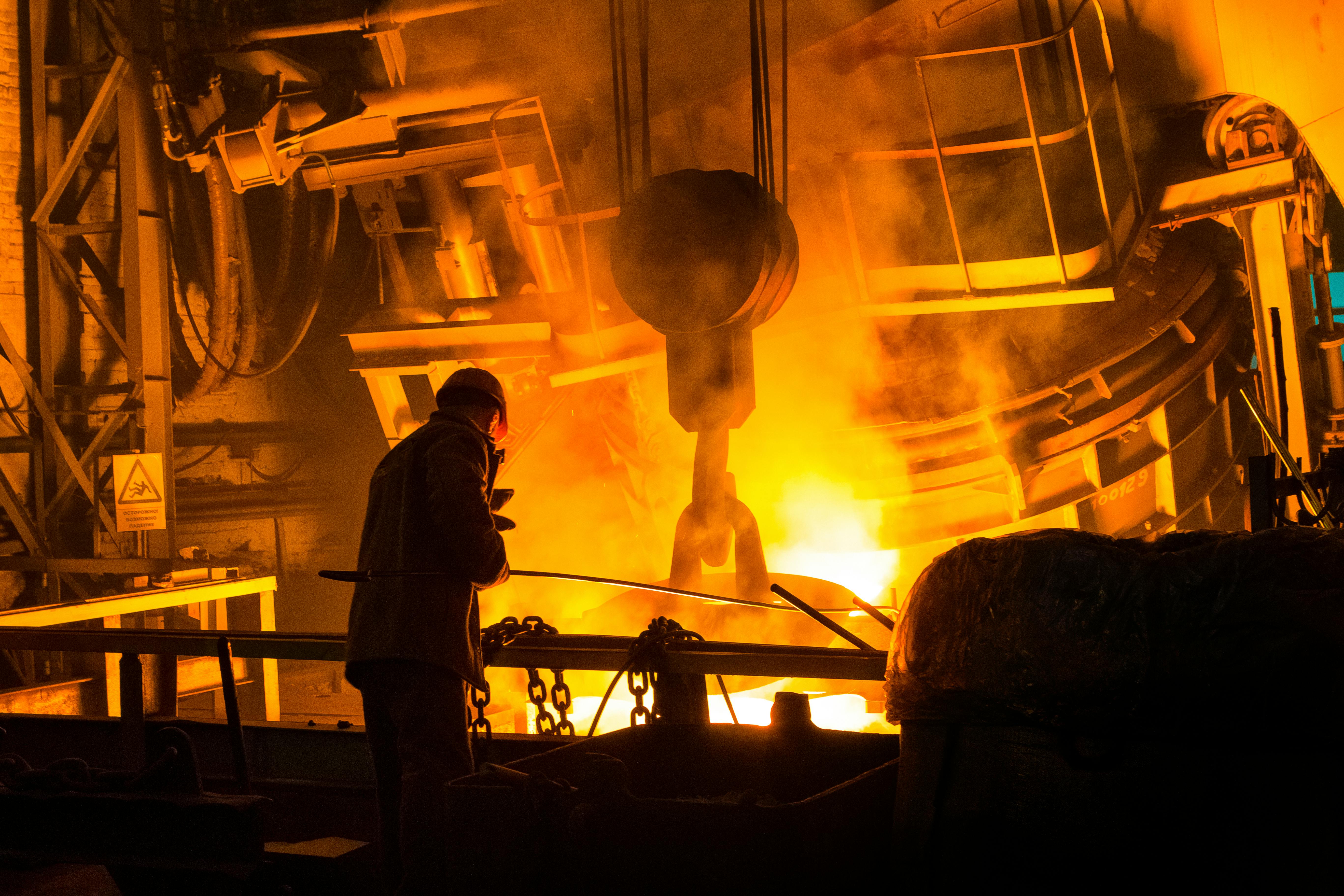
The price of power
In the summer of 2022, something happened to European industry that had not happened since the oil shocks of the 1970s. The price of electricity — the most fundamental input to modern manufacturing, more basic than steel, more essential than labour, more non-negotiable than capital — went vertical. On August 26, 2022, the day-ahead wholesale electricity price on the European Power Exchange hit €1,000 per megawatt-hour in Germany. In France, it touched €750. In the Nordic markets, traditionally Europe's cheapest power region, prices surged past €400. These were not annual averages. They were not peak-hour premiums. They were the cost of keeping the lights on, the furnaces running, the compressors compressing, for a single hour on a single day. And they were, for millions of European industrial operations, the moment when the spreadsheet stopped making sense.
The immediate cause was obvious: Russia's invasion of Ukraine in February 2022, and the subsequent weaponisation of natural gas supplies that had underpinned European power generation for decades. The Nord Stream pipelines — the physical arteries through which Russian gas had flowed to Germany and beyond since the early 2010s — were first throttled, then shut, then sabotaged. Europe, which had imported roughly 40 per cent of its natural gas from Russia in 2021, was forced to replace those volumes at emergency speed, competing on global LNG spot markets against Asian buyers at prices that bore no resemblance to the long-term contract rates European utilities had grown accustomed to. The gas price spike cascaded directly into electricity prices through Europe's marginal pricing system, in which the most expensive generator needed to meet demand sets the price for all generators. When gas-fired power plants — which set the marginal price in most European markets, most hours of the day — were burning gas purchased at four to five times historical rates, the electricity price reflected that cost regardless of how cheaply the nuclear, wind, or hydro plants on the same grid were producing.
But the crisis of 2022 did not create Europe's energy cost problem. It revealed it. The gas supply shock was the match. The kindling had been laid over decades — through policy choices, political compromises, and structural decisions that, taken individually, were defensible, but taken collectively, constructed an energy system that was more expensive, more fragile, and more geopolitically exposed than any of its architects intended. Understanding what happened in 2022 requires understanding what happened in the thirty years before it. And understanding what happened in the thirty years before it requires confronting a set of facts about European energy policy that most participants in the debate would prefer to discuss in the abstract rather than in the specific.
The numbers that matter
Begin with the comparison that European policymakers find most uncomfortable, because it is the most consequential. In 2025, average industrial electricity prices across the European Union range from approximately €100 to €200 per megawatt-hour, depending on the country, the size of the consumer, and the specific contract structure. In France, where nuclear baseload keeps prices lower than most European neighbours, large industrial consumers pay approximately €80 to €120 per MWh. In Germany, historically Europe's manufacturing powerhouse, industrial electricity prices range from €130 to €200 per MWh. In Italy, Spain, and the Netherlands, the range is broadly similar, with significant variation by contract type and exemption status.
Now consider the United States. Average industrial electricity prices in 2025 are approximately $50 to $80 per MWh — and that is the national average, pulled up by expensive markets like California and New England. In the states that are actually attracting manufacturing investment — Texas, Georgia, Tennessee, Ohio, the Carolinas — industrial electricity prices range from $40 to $65 per MWh. In regions with abundant hydropower or low-cost natural gas, prices can fall below $35 per MWh. These are not subsidised prices. They are market prices reflecting cheap domestic natural gas (the United States is the world's largest producer), abundant generation capacity, and a regulatory environment that, whatever its other shortcomings, does not load electricity bills with the policy costs that European bills carry.
And then there is China. Average industrial electricity prices in China in 2025 range from approximately $40 to $70 per MWh for standard industrial consumers, with large strategic users — aluminium smelters, chemical plants, data centres designated as national priorities — paying significantly less through direct negotiated contracts with provincial utilities. In provinces with abundant coal or hydropower — Yunnan, Sichuan, Inner Mongolia, Xinjiang — industrial electricity can be purchased for as little as $25 to $35 per MWh. Chinese industrial electricity prices are, on average, roughly one-third to one-half of European levels. For the most energy-intensive processes, the gap is wider still.
These numbers are not abstract. They are the reason BASF — the world's largest chemical company by revenue, founded in Ludwigshafen in 1865, and for a century and a half the anchor of the German chemical industry — announced in 2022 that it was permanently downsizing its Ludwigshafen operations and redirecting investment to a new €10 billion integrated chemical complex in Zhanjiang, China. BASF's CEO Martin Brudermüller was unusually direct about the reasoning: "We are losing competitiveness in Europe. The gap in energy costs, particularly gas and electricity, has become too wide." When the largest chemical company in the world, with 160 years of operational history in Germany, decides that the energy economics of its home country no longer work, the signal is not ambiguous.
They are the reason ArcelorMittal, the world's second-largest steelmaker, idled blast furnaces across Germany, France, Spain, and Poland in 2022 and 2023, and announced that many of those shutdowns would be permanent. Steelmaking in an electric arc furnace — the route that most European green steel strategies depend on — consumes roughly 400 to 500 kilowatt-hours per tonne. At European electricity prices, that energy cost alone makes European electric arc furnace steel uncompetitive against Chinese blast furnace steel, even before accounting for labour, raw materials, or capital costs. The arithmetic is merciless.
They are the reason that when Northvolt sought to build Europe's flagship battery gigafactory, it chose Sweden — not because of Swedish engineering talent or government policy, but because Sweden has the lowest industrial electricity prices in Western Europe, thanks to a power system built on hydroelectric and nuclear generation. Even so, Northvolt's Swedish electricity costs were roughly double what a comparable facility would pay in the American South. The factory failed for multiple reasons. Energy costs were among them.
How Europe built an expensive grid
The European energy cost disadvantage is not an act of God. It is the cumulative result of specific policy decisions, each of which had a logic at the time, and which together produced an electricity system that is structurally more expensive than its competitors. Understanding these decisions is essential, because the path to fixing the cost problem requires understanding what caused it — and several of the causes are politically sacred in ways that make honest discussion difficult.
The first cause is gas dependency. For three decades, European energy strategy was built on a simple proposition: Russian natural gas was cheap, abundant, and — the critical assumption — reliably available. Germany, the continent's industrial engine, constructed its entire energy transition strategy around gas as a "bridge fuel" — a lower-carbon alternative to coal that would provide flexible generation capacity while renewables scaled up. The Nord Stream pipeline system, running directly from Russia to Germany under the Baltic Sea, was the physical manifestation of this strategy. By 2021, Germany imported roughly 55 per cent of its natural gas from Russia. Italy imported approximately 40 per cent. Austria, over 80 per cent. The dependency was not a secret. It was policy.
The strategic error was not in using gas. Gas is a flexible fuel, relatively efficient in combined-cycle power plants, and lower in carbon intensity than coal. The strategic error was in sourcing that gas overwhelmingly from a single supplier whose geopolitical interests were manifestly divergent from Europe's own. Every European diplomat, energy official, and intelligence analyst knew that Russia had used gas supply as a political weapon before — against Ukraine in 2006 and 2009, against Belarus repeatedly, against the Baltic states through pricing pressure. The assumption was that the scale of the EU-Russia gas relationship made weaponisation impractical — that Russia needed the revenue as much as Europe needed the gas. This assumption was wrong, and it was wrong in the specific way that assumptions about rational economic behaviour are always wrong when applied to regimes whose decision-making is driven by security logic rather than economic logic.
The second cause is carbon pricing. The EU Emissions Trading System, launched in 2005 and progressively tightened over two decades, imposes a cost on carbon emissions that has no equivalent in the United States and only a partial, much cheaper equivalent in China. In 2025, the EU carbon price fluctuates between €60 and €90 per tonne of CO₂. This cost is passed through directly to electricity consumers via the generation cost of fossil-fuelled power plants. A gas-fired power plant emitting approximately 0.4 tonnes of CO₂ per MWh adds €24 to €36 per MWh in carbon costs alone. A coal plant, with roughly double the emissions intensity, adds proportionally more. This cost does not exist for American industrial consumers, whose electricity is generated in a carbon-unpriced market. It barely exists for Chinese consumers, whose national ETS covers only the power sector, at a price of roughly ¥70 to ¥90 per tonne ($10 to $12) — a fraction of the European level.
The third cause — and the one that generates the most political heat — is the nuclear question. Europe's relationship with nuclear power is, to put it diplomatically, incoherent. France generates roughly 65 to 70 per cent of its electricity from nuclear power, making it one of the most decarbonised grids in the world and giving French industry electricity prices that are among the lowest in Europe. Next door, Germany — France's closest economic partner and the EU's largest economy — shut down its last three nuclear reactors on April 15, 2023, completing a phase-out decision first taken in 2002 and reaffirmed after the Fukushima disaster in 2011. Germany replaced its nuclear generation capacity primarily with renewables (wind and solar) and gas — the same gas that became unaffordable when Russia invaded Ukraine. The irony is structural and ongoing.
Belgium plans to extend the life of two reactors (Doel 4 and Tihange 3) until 2035 after initially planning to phase out nuclear entirely. The Netherlands announced in 2022 that it would build two new nuclear reactors, reversing decades of nuclear scepticism. Sweden, under a centre-right government, lifted a cap on nuclear reactors and began planning for new build. Finland connected the long-delayed Olkiluoto 3 reactor in 2023, adding 1.6 gigawatts of baseload capacity. Poland, which has never had a nuclear reactor, is building its first — in partnership with Westinghouse — with completion targeted for the early 2030s. Italy, which banned nuclear power by referendum in 1987 and reaffirmed the ban in 2011, has begun tentatively discussing small modular reactors. The continent is moving in six directions simultaneously, with no coordinated strategy, no common timeline, and no shared assessment of what role nuclear should play in a decarbonised European energy system.
Europe generates some of the most expensive industrial electricity in the developed world. The three main reasons — gas dependency, carbon pricing, and nuclear incoherence — are all policy choices. The cost gap with America and China is not geological fate. It is political construction.
Editorial observation
The fourth cause is the cost of the renewable transition itself — not the levelised cost of energy from wind and solar, which has fallen dramatically and is now competitive with or cheaper than fossil fuels in most European markets, but the system costs that come with integrating large volumes of variable generation into an electricity grid designed for dispatchable baseload. These system costs include: grid reinforcement and expansion to connect offshore wind farms and solar parks located far from industrial demand centres; backup generation capacity (typically gas) required for periods of low wind and solar output; battery storage and other flexibility mechanisms; curtailment costs when renewable generation exceeds demand; and the network charges required to fund all of the above. These costs are real, material, and largely invisible in the simple "levelised cost" comparisons that dominate the public debate about renewable energy economics.
Germany's grid fees — the charges paid by industrial consumers to fund the transmission and distribution networks — have risen by over 40 per cent since 2019, driven primarily by the cost of grid expansion required to transport wind power from the North Sea coast to industrial demand in the south and west. The EEG surcharge, which funded the feed-in tariffs that kickstarted the German renewable energy industry, was abolished in 2022 as a crisis measure — but the costs it covered did not disappear. They were merely shifted from electricity bills to the federal budget, where they are paid through taxation rather than volumetric charges. The electrons got cheaper. The system that delivers them did not.
The subsidy landscape nobody maps honestly
Every major industrial economy subsidises energy. The differences are in the mechanism, the transparency, and the scale. The honest comparison that almost never appears in policy debates is: what is the total subsidy intensity — direct and indirect — per megawatt-hour of industrial electricity consumed in each major economy? The answer is difficult to compute precisely because each economy structures its subsidies differently, but the broad picture is clear enough to be informative, and damning enough to be uncomfortable.
In the United States, energy subsidies take multiple forms. Direct federal subsidies to fossil fuel production — accelerated depreciation for oil and gas investments, the percentage depletion allowance, intangible drilling cost expensions — are estimated by the International Monetary Fund at approximately $20 billion per year. The IRA added massive production and investment tax credits for clean energy generation, reducing the effective cost of new solar and wind capacity by 30 to 50 per cent. State-level subsidies vary enormously: Texas offers property tax abatements for manufacturing facilities, Tennessee provides reduced-rate industrial electricity through the Tennessee Valley Authority, and Georgia packages site-specific incentives for major investments. The cumulative effect is that American industrial electricity prices reflect not just cheap domestic gas and abundant generation capacity, but a layered system of federal and state subsidies that reduce the effective cost further still.
In China, the subsidy architecture is both deeper and less transparent. Provincial governments have wide latitude to set electricity prices for strategic industries, and routinely offer below-cost rates to attract manufacturing investment. State-owned power generation companies are instructed to supply electricity at rates that would be loss-making for a private utility — the losses are absorbed as a cost of industrial policy. Coal subsidies, while officially being phased out, remain substantial: state-directed lending to coal mining companies at below-market rates, preferential land allocation for coal-fired power plants, and the systematic underpricing of environmental externalities all reduce the effective cost of coal-fired generation below what a genuinely market-based system would produce. The IMF's estimate of China's total energy subsidies — including the unpriced environmental and health costs of fossil fuel consumption — exceeds $2 trillion per year, making it the world's largest energy subsidiser by a wide margin.
Europe subsidises too, but differently. European energy subsidies are increasingly concentrated on the demand side — support for industrial consumers to offset the cost disadvantage that European policy itself creates. Germany's Strompreisbremse (electricity price brake), introduced in 2023, capped industrial electricity prices at €130 per MWh for a portion of consumption. France's Accès Régulé à l'Électricité Nucléaire Historique (ARENH) mechanism allows eligible consumers to purchase nuclear electricity at a regulated price of €42 per MWh — a fraction of market rates — effectively socialising the low marginal cost of the existing nuclear fleet. Multiple member states offer reduced network charges, renewable surcharge exemptions, and compensation for indirect carbon costs to energy-intensive industries classified as "at risk of carbon leakage." These measures are necessary, in the sense that without them, entire industrial sectors would exit Europe. But they are also evidence of a system that creates a cost problem with one hand and then compensates for it with the other — taxing energy through carbon pricing and renewable levies, then subsidising energy-intensive users to prevent them from leaving. The net effect is a transfer from small and medium consumers (who pay the full retail price) to large industrial users (who receive partial exemptions), mediated by a bureaucratic apparatus of exemption schemes, compensation mechanisms, and eligibility criteria that adds its own administrative cost.
Europe's energy subsidy system has a distinctive structure: it imposes policy costs that raise electricity prices above market levels, then compensates selected consumers for those same policy costs. The result is a bureaucracy of offsets that achieves, at considerable administrative expense, what not imposing the costs in the first place would have achieved for free.
Editorial observation
The nuclear question Europe refuses to settle
No discussion of European energy costs is complete without confronting nuclear power directly, because nuclear power is the single largest variable determining electricity costs within Europe itself. France, with its fleet of 56 operational reactors (reduced from a peak of 58), generates roughly 65 to 70 per cent of its electricity from nuclear, giving it the lowest-carbon grid among major European economies and industrial electricity costs that are €30 to €50 per MWh below the European average. Germany, having shut down its entire nuclear fleet, has replaced that baseload with a combination of wind, solar, and gas that is — when system costs are fully accounted for — significantly more expensive. The France-Germany electricity cost differential is not primarily a function of different renewable deployment rates, different gas procurement strategies, or different grid architectures. It is primarily a function of the fact that France has nuclear baseload and Germany does not.
The arithmetic is not subtle. A nuclear power plant, once built, generates electricity at a marginal cost of approximately €10 to €15 per MWh — this covers fuel, operations, and maintenance, but not the capital cost of construction, which for existing plants was amortised decades ago. A gas-fired combined-cycle plant, by contrast, generates at a marginal cost of €60 to €100 per MWh at 2025 gas prices, plus €24 to €36 in carbon costs. Offshore wind generates at a levelised cost of €50 to €80 per MWh, but requires backup capacity and grid investment that raises the system cost to €80 to €120. Solar photovoltaics have the lowest levelised cost — €30 to €50 per MWh in southern Europe — but the lowest capacity factors and the highest system integration costs. For baseload industrial power — the continuous, predictable supply that a steel mill, a chemical plant, or a data centre requires around the clock — nuclear remains the cheapest option available to any country that already has it. The question is whether countries that do not have it can afford to build it.
The answer to that question is complicated by the catastrophic cost and schedule performance of recent European nuclear construction projects. Finland's Olkiluoto 3, commissioned in 2005, was completed in 2023 — eighteen years late and roughly four times over its original budget. France's Flamanville 3 EPR, commissioned in 2007, achieved grid connection in 2024 after seventeen years of construction and a final cost of approximately €13.2 billion, compared to an original estimate of €3.3 billion. The UK's Hinkley Point C, under construction since 2018, has seen its estimated cost rise from £18 billion to over £46 billion, with a projected completion date now in the mid-2030s. These are not projects that inspire confidence in nuclear new build as a near-term solution to Europe's energy cost problem.
Yet the comparison is misleading if it is used to argue against nuclear per se rather than against the specific institutional and industrial failures that produced these outcomes. South Korea's Korea Hydro & Nuclear Power has built reactors on schedule and on budget, including the four Barakah units in the United Arab Emirates — delivered on time at a cost of approximately $20 billion for 5.6 gigawatts. China has commissioned more than twenty nuclear reactors in the last decade, consistently completing them within five to six years and at costs roughly one-third of European equivalents. The problem is not that nuclear plants cannot be built affordably. The problem is that Europe has lost the industrial capacity, the institutional knowledge, and the regulatory efficiency required to build them affordably. France's Framatome — the only European company capable of fabricating nuclear reactor pressure vessels — has shrunk its workforce and its supply chain to the point where scaling up for a major new-build programme would take years. The skills atrophy is as real as the cost overruns, and it is a direct consequence of thirty years of political ambivalence about nuclear power in most of Europe.
The emerging technology of small modular reactors — SMRs — is frequently cited as the solution to nuclear's cost and construction challenges. SMRs promise factory-fabricated reactor modules that can be transported to site and assembled in months rather than years, with capital costs an order of magnitude lower than conventional gigawatt-scale plants. The concept is real. The products are not — not yet. NuScale, the American SMR developer that was furthest along in the licensing process, cancelled its first commercial project in November 2023 after costs escalated beyond the target that had made the project viable. Rolls-Royce's SMR programme in the UK has secured government support but will not produce its first operating reactor before the early 2030s at the earliest. France's Nuward SMR project, led by EDF, is on a similar timeline. For any European industrial operator making energy procurement decisions today, SMRs are a promise, not a power source. The gap between the promise and the power is measured in years and billions.
Factories follow electrons
The most consequential effect of Europe's energy cost disadvantage is not measured in electricity bills. It is measured in investment decisions — the quiet, undramatic, individually rational decisions by thousands of companies about where to build the next factory, where to expand the next production line, where to locate the next data centre. Each decision is based on a spreadsheet. Each spreadsheet has a line for energy costs. And in 2025, that line increasingly tips the arithmetic away from European geography.
The evidence is accumulating in sectoral patterns that, taken together, constitute a slow-motion industrial migration. In chemicals — Europe's largest manufacturing sector by revenue — the European Chemical Industry Council (Cefic) reported that European chemical production in 2024 was 12 per cent below its 2017 peak, while chemical production in the United States and China grew over the same period. Cefic's surveys of member companies found that energy costs were cited as the primary reason for reduced European production by 73 per cent of respondents. The decline is not evenly distributed: basic chemicals and petrochemicals, which are the most energy-intensive segments, have contracted most sharply, while speciality and pharmaceutical chemicals have been more resilient. But basic chemicals are the feedstock for everything else. When the base of the pyramid shrinks, the upper tiers become dependent on imports for their raw materials — creating a new dependency that mirrors, in chemistry, the semiconductor dependency examined in the previous episode.
In metals, the pattern is starker. European primary aluminium production has declined by over 50 per cent since 2000, and the pace of decline has accelerated since 2022. Aluminium smelting is one of the most electricity-intensive industrial processes, consuming approximately 14 to 16 megawatt-hours per tonne of metal produced. At European electricity prices, the energy cost alone to produce a tonne of aluminium exceeds $1,400 to $2,400. At Chinese prices, it is $350 to $700. At Norwegian prices (where hydroelectric power keeps costs closer to $400 to $600 per tonne), production is viable — but Norway's hydroelectric capacity is finite, and the queue of energy-intensive industries seeking Norwegian electrons already exceeds available supply. The result is that Europe imports a growing share of its aluminium from the Persian Gulf (where gas-fired smelters benefit from near-zero feedstock costs), India, and China. European aluminium capacity is not being relocated. It is being liquidated.
In steel, the energy transition is forcing a technology shift that amplifies the cost problem. The European Green Deal's decarbonisation targets require the steel industry to move from blast furnace steelmaking (using coke derived from coal) to electric arc furnace steelmaking (using electricity to melt scrap and direct reduced iron) or hydrogen-based direct reduction. Both alternative routes are dramatically more electricity-intensive than the blast furnace route. An electric arc furnace consumes roughly 400 to 500 kWh per tonne; hydrogen-based direct reduction, when the full chain from electrolysis to reduction is accounted for, requires approximately 3,000 to 4,000 kWh per tonne. At European electricity prices, the energy cost of green hydrogen steel could exceed €400 per tonne — nearly equal to the total production cost of conventional Chinese blast furnace steel. The paradox is precise: the faster Europe decarbonises its steel industry, the more uncompetitive that industry becomes on energy costs, unless electricity prices fall dramatically or carbon border adjustments rise to levels that European trading partners will resist.
The data centre sector provides a particularly clear illustration of how energy costs shape geography. Data centres are, in essence, very large consumers of electricity that produce computation as their output. Their location decisions are driven primarily by three factors: connectivity, electricity cost, and electricity reliability. The United States currently hosts approximately 40 per cent of the world's hyperscale data centre capacity — a share that is growing as AI workloads drive unprecedented demand for compute infrastructure. Europe hosts approximately 17 per cent. The gap is not primarily about regulation or market access. It is about electricity. A 100-megawatt data centre operating at European industrial prices pays roughly €90 to €150 million per year in electricity costs. The same facility, consuming the same quantity of electrons, pays $40 to $65 million in Texas or Georgia. The differential — €50 to €90 million per year — compounds over the 15- to 20-year operating life of a data centre. When Microsoft, Google, Meta, and Amazon decide where to build their next AI training facility, the spreadsheet matters more than the flag.
The irony is that several of Europe's competitive strengths depend on energy-intensive industries that Europe's energy costs are making unviable. European automotive manufacturing requires European steel and aluminium. European pharmaceutical manufacturing requires European speciality chemicals. European aerospace requires European titanium processing and advanced alloys. When the upstream industries migrate because energy costs are intolerable, the downstream industries that depend on them face a choice: import their inputs at higher cost and longer lead times, or follow their suppliers abroad. The industrial ecosystem that took a century to build does not survive the departure of its foundation.
- Chemicals: European production 12% below 2017 peak; 73% of producers cite energy costs as the primary constraint.
- Aluminium: Over 50% decline in European primary production since 2000; smelting electricity costs 2-5x higher than competitors.
- Steel: Green transition routes (EAF, hydrogen DRI) are 6-8x more electricity-intensive than blast furnace; energy cost gap widens as decarbonisation deepens.
- Data centres: European facilities pay 2-3x more for electricity than US equivalents; AI investment gravitating to cheaper-power geographies.
- Batteries: Even in low-cost Sweden, electricity prices are roughly double US South; contributing factor in Northvolt's failure.
What solving the equation actually requires
The energy equation has a solution. It does not have a painless one. And it does not have one that can be delivered within a single electoral cycle, which is why most politicians prefer to discuss the symptoms — factory closures, investment leakage, competitiveness reports — rather than the structural causes.
The first requirement is generation capacity. Europe needs more baseload electricity generation — significantly more — at costs that are competitive with American and Chinese levels. This means, inescapably, extending the life of every existing nuclear reactor that can safely operate, and building new nuclear capacity at a pace and cost that Europe has not achieved in decades. It means accelerating renewable deployment, but honestly — with full accounting for system integration costs, not just levelised generation costs. It means maintaining gas-fired generation as a bridge fuel while acknowledging that gas will remain necessary for grid stability as long as cost-effective long-duration storage remains unavailable. And it means doing all of this simultaneously, which requires capital allocation on a scale that the EU's current fiscal architecture is not designed to support.
The second requirement is market reform. Europe's marginal pricing system — in which the most expensive generator sets the price for all generators — was designed for a market dominated by dispatchable fossil fuel plants with broadly similar cost structures. It is poorly suited to a market with a growing share of near-zero-marginal-cost renewable generation and expensive gas-fired backup. When wind is blowing and the sun is shining, the system produces wholesale prices near zero — too low to remunerate the capital investment in the renewable capacity itself. When the wind drops, gas plants set the marginal price at levels that bear no relation to the average cost of generation. The result is price volatility that makes long-term industrial energy procurement extraordinarily difficult and discourages the fixed-price, long-term contracts that energy-intensive industries need to plan investments. The EU electricity market reform adopted in 2024 made partial progress — introducing contracts for difference for new generation capacity and expanding power purchase agreement frameworks — but did not fundamentally address the marginal pricing distortion.
The third requirement is honesty about carbon pricing. The EU ETS is, in principle, the most economically efficient mechanism for reducing emissions — it puts a price on carbon and lets the market find the cheapest abatement opportunities. In practice, it adds a significant cost to European electricity that American and Chinese competitors do not bear. CBAM is supposed to equalise this cost at the border, but its product coverage is too narrow to protect the sectors most exposed to international competition. Either CBAM must be expanded to cover manufactured goods — which will be diplomatically explosive — or the carbon cost borne by electricity-intensive industries must be offset through direct compensation that is faster, simpler, and more generous than the current patchwork of exemption schemes. The worst outcome is the current one: a carbon price high enough to make European industry uncompetitive, but not high enough to actually drive the investment in clean generation capacity that would reduce electricity costs in the long run.
The fourth requirement is political. Europe needs a common energy policy — not the current patchwork of 27 national energy strategies, each reflecting different fuel mixes, different nuclear positions, different subsidy structures, and different regulatory philosophies. The single market for goods is meaningless if the cost of the primary input to manufacturing varies by a factor of three between member states. A Spanish solar panel manufacturer and a Finnish pulp mill and a German chemical plant are all "European," but they operate in energy markets so different that they might as well be on different continents. The Energy Union, proposed in 2015, was supposed to address this fragmentation. A decade later, it remains more aspiration than reality.
The energy equation is solvable. It requires building more generation capacity, reforming electricity markets, being honest about carbon pricing, and creating a genuine common energy policy. Every one of these steps is politically difficult. The alternative — deindustrialisation by spreadsheet — is politically easier right until it becomes irreversible.
Editorial observation
The uncomfortable truth is that Europe's energy cost disadvantage is largely self-inflicted. It was not caused by a lack of natural resources — Europe has vast offshore wind potential, significant solar resources in its southern member states, and uranium reserves or supply contracts sufficient to support a major nuclear fleet. It was not caused by technological inferiority — European companies are world leaders in offshore wind turbine design, nuclear engineering, and electricity grid management. It was caused by political choices: the choice to depend on Russian gas rather than diversify supply earlier; the choice to phase out nuclear in Germany at precisely the moment when decarbonisation demanded more zero-carbon baseload; the choice to impose carbon costs without equivalent border adjustments; the choice to structure the energy transition in a way that loaded system costs onto industrial consumers; and the choice to maintain 27 separate energy policies in what is supposed to be a single market.
Factories follow electrons. They always have. The iron foundries of the 18th century clustered around coal deposits. The aluminium smelters of the 20th century clustered around hydroelectric dams. The data centres of the 21st century cluster around cheap, reliable power. This is not a metaphor. It is physics — and economics. The question facing Europe is not whether its industries will migrate if the energy cost gap persists. They will. They already are. The question is whether Europe will make the political choices necessary to close that gap before the migration becomes a rout. The equation is on the table. The variables are known. The only thing missing is the willingness to solve it.
Sources
- European Power Exchange (EPEX SPOT) — Historical price data — https://www.epexspot.com/en/market-data
- Draghi Report — EU Competitiveness and Energy Costs — https://commission.europa.eu/topics/strengthening-european-competitiveness/eu-competitiveness-looking-ahead_en
- BASF — Ludwigshafen downsizing announcement — https://www.basf.com/global/en/media/news-releases/2022/10/p-22-358.html
- Cefic — European Chemical Industry Facts and Figures 2024 — https://cefic.org/a-pillar-of-the-european-economy/facts-and-figures-of-the-european-chemical-industry/
- IEA — World Energy Outlook 2024 — https://www.iea.org/reports/world-energy-outlook-2024
- IMF — Global Fossil Fuel Subsidies — https://www.imf.org/en/Topics/climate-change/energy-subsidies
- European Aluminium Association — Production statistics — https://european-aluminium.eu/data/
- EU Electricity Market Reform 2024 — https://energy.ec.europa.eu/topics/markets-and-consumers/market-legislation/electricity-market-design_en